Recorded Oct
2026
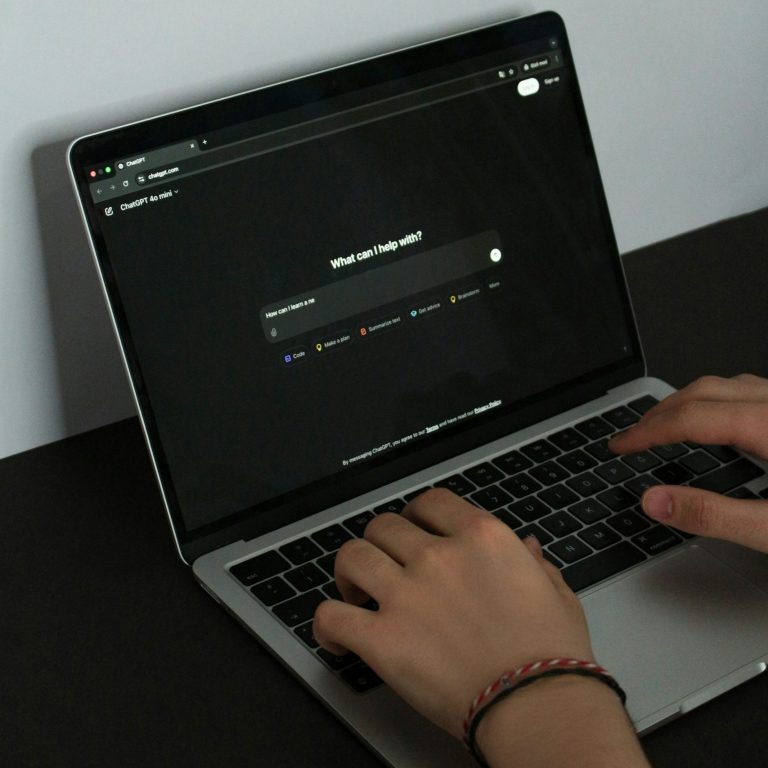
Free CE Course (1 hour) AI Developments in MFT and Counseling
Artificial intelligence is changing how our clients seek mental health support, how we document our work, and how future clinicians are trained.
What does this mean for therapists?
In this self-paced course, Dr. Sofia presents emerging AI applications in mental health care, including therapy chatbots, AI-assisted clinical documentation, and virtual client simulation for training clinicians.
You will learn about current research, opportunities, limitations, and practical implications of integrating AI into therapy.

MFT Ethics & AI Clinical Documentation Tools
Self-study Quick CE Course
*New Self-Study CE Course!*
MFT Ethics & AI Clinical Documentation Tools
Curious about how AI note-taking tools like Upheal, Mentalyc AI, Twofold Health, Blueprint, Clinical Notes AI and Berries AI are retaining, storing, deleting and using "deidentified" client data and how using their platform may impact therapy?
🧠💻 Wondering what's ethically sound, and what raises red flags?
In this 1.75-hour self-paced CE course ($20), you'll get:
✅ A side-by-side comparison of 6 leading AI documentation tools
✅ An analysis of ethical risks and HIPAA compliance; we went deep into their Terms of Use to read the fine print of how client data is stored, retained and what your opt-out options are
✅ Real-world testing results from mock therapy sessions (in English & Spanish!)
✅ We show you exactly what to look for when you vet AI note-taking tools to use in your own practice and how to fully inform your clients of risks+benefits
🎯 This course is for YOU if you are a therapist, clinical supervisor, or educator. We give you exactly what you need to stay informed, intentional, and ethical as you explore AI clinical documentation tools.
📥 Preview & Enroll Now on my Podia website.
Educate yourself about the intersection of AI, therapy and education.
Research on AI X Therapy X Learning
The below get updated periodically and many are open-access articles. :)
Arnaiz-Rodriguez, A., Baidal, M., Derner, E., Annable, J. L., Ball, M., Ince, M., Perez Vallejos, E., & Oliver, N. (2026). Between help and harm: An evaluation study of mental health crisis handling by large language models. JMIR Mental Health, 13, e88435. https://doi.org/10.2196/88435
Barcaui, A. (2025). ChatGPT as a cognitive crutch: Evidence from a randomized controlled trial on knowledge retention. Social Sciences & Humanities Open, 12, 102287. https://doi.org/10.1016/j.ssaho.2025.102287
Bassner, P., Lenk-Ostendorf, B., Beinstingel, R., Wasner, T., & Krusche, S. (2026). Less stress, better scores, same learning: The dissociation of performance and learning in AI-supported programming education. Computers and Education: Artificial Intelligence, 10, 100537. https://doi.org/10.1016/j.caeai.2025.100537
Chen, P.-J. (2026). AI-enhanced virtual reality simulation for nursing students’ empathy: Automated scoring and inter-rater reliability in a randomised controlled study. Nurse Education Today, 159, 106968. https://doi.org/10.1016/j.nedt.2025.106968
Chen, S., & Cheung, A. H. S. (2025). Effect of generative artificial intelligence on university students learning outcomes: A systematic review and meta-analysis. Educational Research Review, 49, 100737. https://doi.org/10.1016/j.edurev.2025.100737
Florineth, G. A., Klima, I., Boeker, A. L., Catzeflis, P., Wopfner, A., Denier, N., Bracht, T., Adorjan, K., Pfammatter, M., Müller, F., & Soravia, L. M. (2026). Psychological therapy quantity and depressive symptom reduction in psychedelic-assisted therapy: A systematic review and meta-analysis. JAMA Network Open, 9(1), e2554843. https://doi.org/10.1001/jamanetworkopen.2025.54843
Folk, D., & Dunn, E. (2026). How does turning to AI for companionship predict loneliness and vice versa? Psychological Science, 37(4), 276–286. https://doi.org/10.1177/09567976261427747
Gernert, C. C., & Falter-Wagner, C. M. (2026). Heart rate synchrony as an objective biomarker in psychotherapy: A wearable-based pilot study. European Archives of Psychiatry and Clinical Neuroscience, 276(5), 2101–2112. https://doi.org/10.1007/s00406-026-02248-4
Howcroft, A., Bennett-Weston, A., Khan, A., Griffiths, J., Gay, S., & Howick, J. (2025). AI chatbots versus human healthcare professionals: A systematic review and meta-analysis of empathy in patient care. British Medical Bulletin, 156(1), ldaf017. https://doi.org/10.1093/bmb/ldaf017
Kasturiratna, K. T. A. S., & Hartanto, A. (2026). Attachment to artificial intelligence: Development of the AI Attachment Scale, construct validation, and the psychological mechanisms of human–AI attachment. Computers in Human Behavior Reports, 21, 100912. https://doi.org/10.1016/j.chbr.2025.100912
Kim, S. (2026). Enhancing empathy in nursing students through a multimodal artificial intelligence-supported simulation: A mixed-methods study. Nurse Educator. Advance online publication. https://doi.org/10.1097/NNE.0000000000002358
Kreijkes, P., Kewenig, V., Kuvalja, M., Lee, M., Hofman, J. M., Vitello, S., Sellen, A., Rintel, S., Goldstein, D. G., Rothschild, D. M., Tankelevitch, L., & Oates, T. (2026). Effects of LLM use and note-taking on reading comprehension and memory: A randomised experiment in secondary schools. Computers & Education, 243, 105514. https://doi.org/10.1016/j.compedu.2025.105514
McFadyen, J., Habicht, J., Dina, L.-M., Harper, R., Hauser, T. U., & Rollwage, M. (2026). Increasing engagement with cognitive-behavioral therapy (CBT) using generative AI: A randomized controlled trial (RCT). Communications Medicine, 6(1), 129. https://doi.org/10.1038/s43856-025-01321-8
Olisaeloka, L., Richardson, C. G., Wang, A. Y., Munthali, R. J., & Vigo, D. V. (2026). Safety mechanisms and risk mitigation in generative AI mental health chatbots: A systematic scoping review. Healthcare, 14(10), 1395. https://doi.org/10.3390/healthcare14101395
Ruben, M. A., Blanch-Hartigan, D., & Hall, J. A. (2026). What is artificial intelligence (AI) “empathy”? A study comparing ChatGPT and physician responses on an online forum. Journal of General Internal Medicine, 41(5), 1304–1311. https://doi.org/10.1007/s11606-025-10068-w
Rubin, M., Hickson, R., Suen, C., & Vaishnav, S. (2025). Multimodal assessment of therapeutic alliance: A study using wearable technology. Journal of Eye Movement Research, 18(4), 36. https://doi.org/10.3390/jemr18040036
Rubin, M., Li, J. Z., Zimmerman, F., Ong, D. C., Goldenberg, A., & Perry, A. (2025). Comparing the value of perceived human versus AI-generated empathy. Nature Human Behaviour, 9(11), 2345–2359. https://doi.org/10.1038/s41562-025-02247-w
Sayda, D., Bar-Kalifa, E., Gordon, I., & Atzil-Slonim, D. (2026). Flexible and multimodal synchrony during psychotherapy for depression: Addressing the mixed synchrony-outcome findings. Journal of Counseling Psychology, 73(3), 357–368. https://doi.org/10.1037/cou0000860
Shoshani, A., Gurfinkel, B., Kor, A., Ben-Haim, Y., Kanarek, O., Segev, R., Shafir, O., & Arbel, R. (2026). Efficacy of a conversational AI agent for psychiatric symptoms and digital therapeutic alliance: A randomized clinical trial. JAMA Network Open, 9(4), e266713. https://doi.org/10.1001/jamanetworkopen.2026.6713
Tey, K. S., Mazar, A., Tomaino, G., Duckworth, A. L., & Ungar, L. H. (2024). People judge others more harshly after talking to bots. PNAS Nexus, 3(9), pgae397. https://doi.org/10.1093/pnasnexus/pgae397
Tsang, V. W. L., Bhatia, F., Ferrey, A., & Hartmann-Boyce, J. (2026). Group psychedelic-assisted therapy for mental health conditions: A mixed-methods systematic review. Frontiers in Public Health, 14, 1788352. https://doi.org/10.3389/fpubh.2026.1788352
Wang, C. (2026). How emotional response styles of generative AI companions shape adaptive emotion regulation and short-term AI reliance. Frontiers in Psychology, 17, 1950163. https://doi.org/10.3389/fpsyg.2026.1950163
Wenger, J. D., Cameron, C. D., & Inzlicht, M. (2026). People choose to receive human empathy despite rating AI empathy higher. Communications Psychology, 4, 19. https://doi.org/10.1038/s44271-025-00387-3
Zhang, J., Xu, B., Liu, Y., Cai, W., Wu, L., Qi, S., Peng, Y., Yu, J., Long, T., & Ge, B. (2026). Exploring ChatGPT’s potential in dialogic teaching: A comparative neurocognitive study of AI and human instruction. Acta Psychologica, 268, 107268. https://doi.org/10.1016/j.actpsy.2026.107268
Zhang, Y., Zhao, D., Hancock, J. T., Kraut, R., & Yang, D. (2026). Interaction with AI companions and psychological well-being. Nature Human Behaviour, 10(10), 1966–1980. https://doi.org/10.1038/s41562-026-02516-2
Zhu, Q., Li, X., Dong, Y., Chang, P., & Fan, M. (2026). Not all cognitive offloading is equal: Distinguishing dependent and autonomous offloading to generative AI. Frontiers in Psychology, 17, 1878629. https://doi.org/10.3389/fpsyg.2026.1878629
Zuromski, K. L., Meagher, M., Costigan, T., & Olson, E. A. (2026). AI chatbots and youth suicide risk: Current evidence, critical gaps, and a clinical research agenda. npj Digital Medicine. Advance online publication. https://doi.org/10.1038/s41746-026-03080-9
